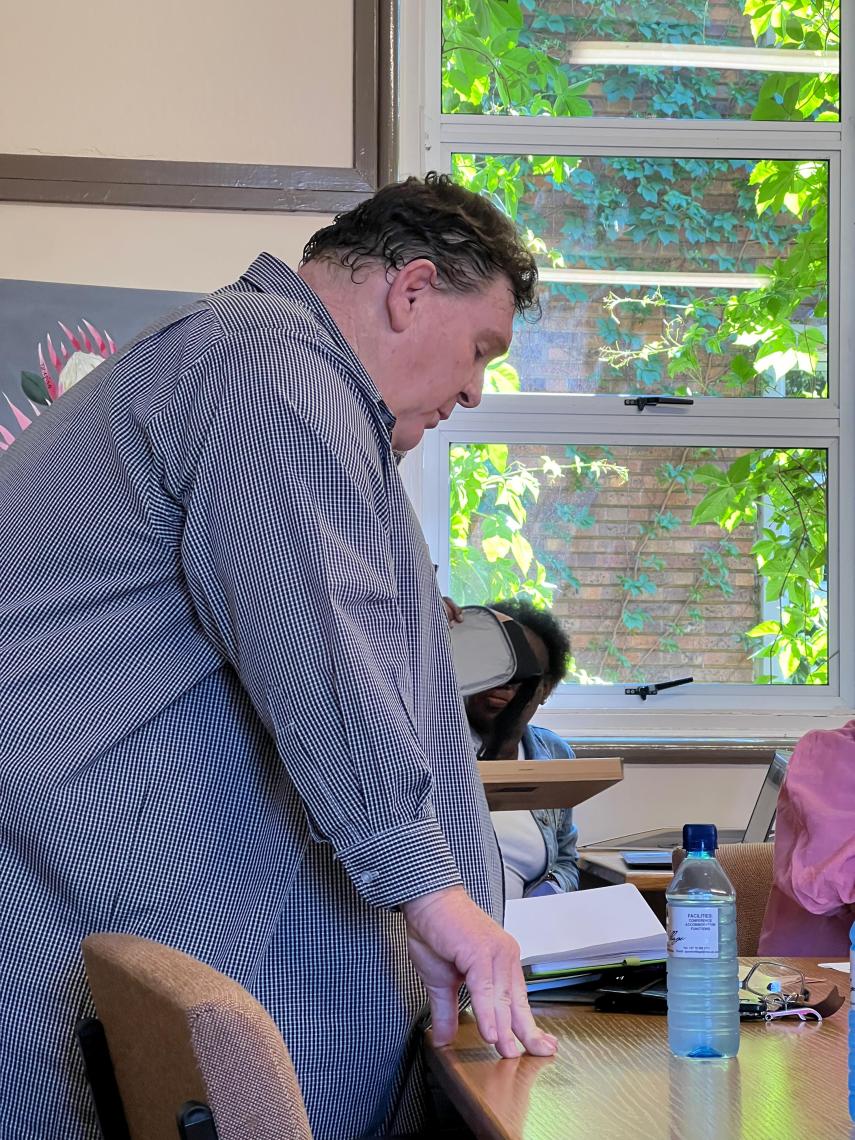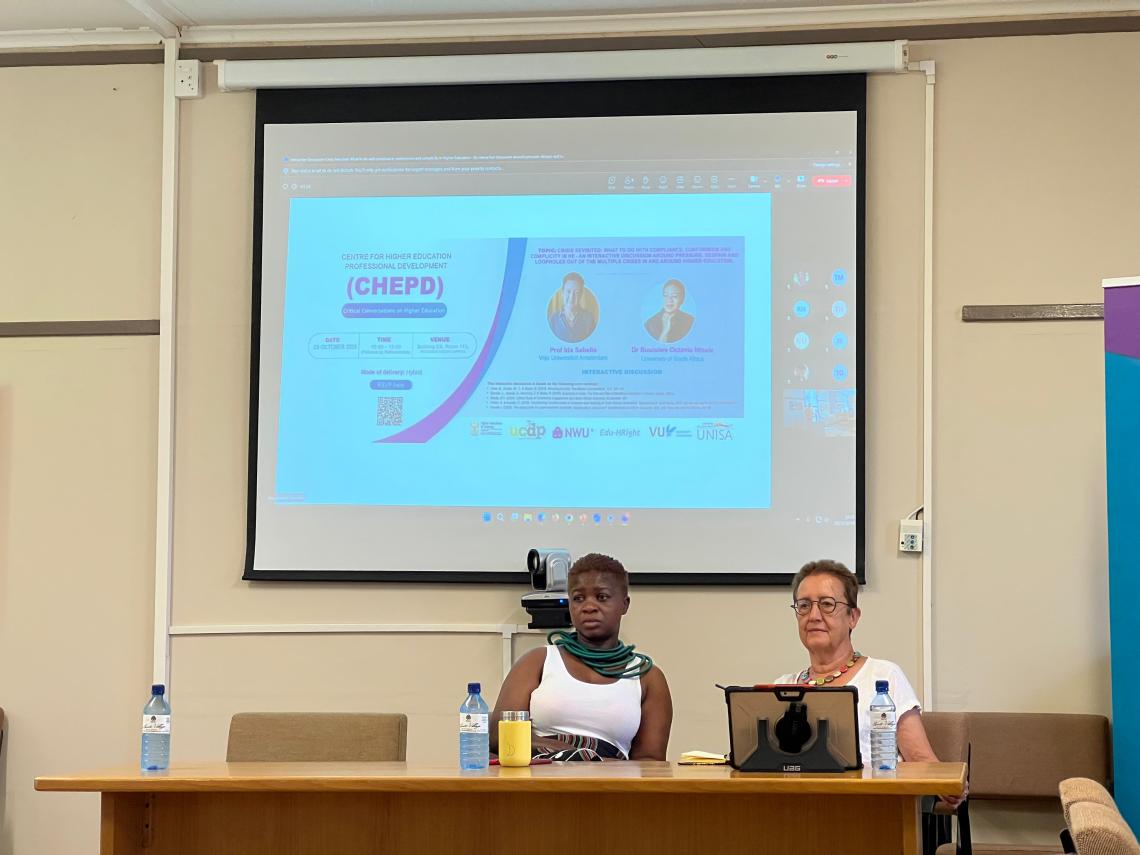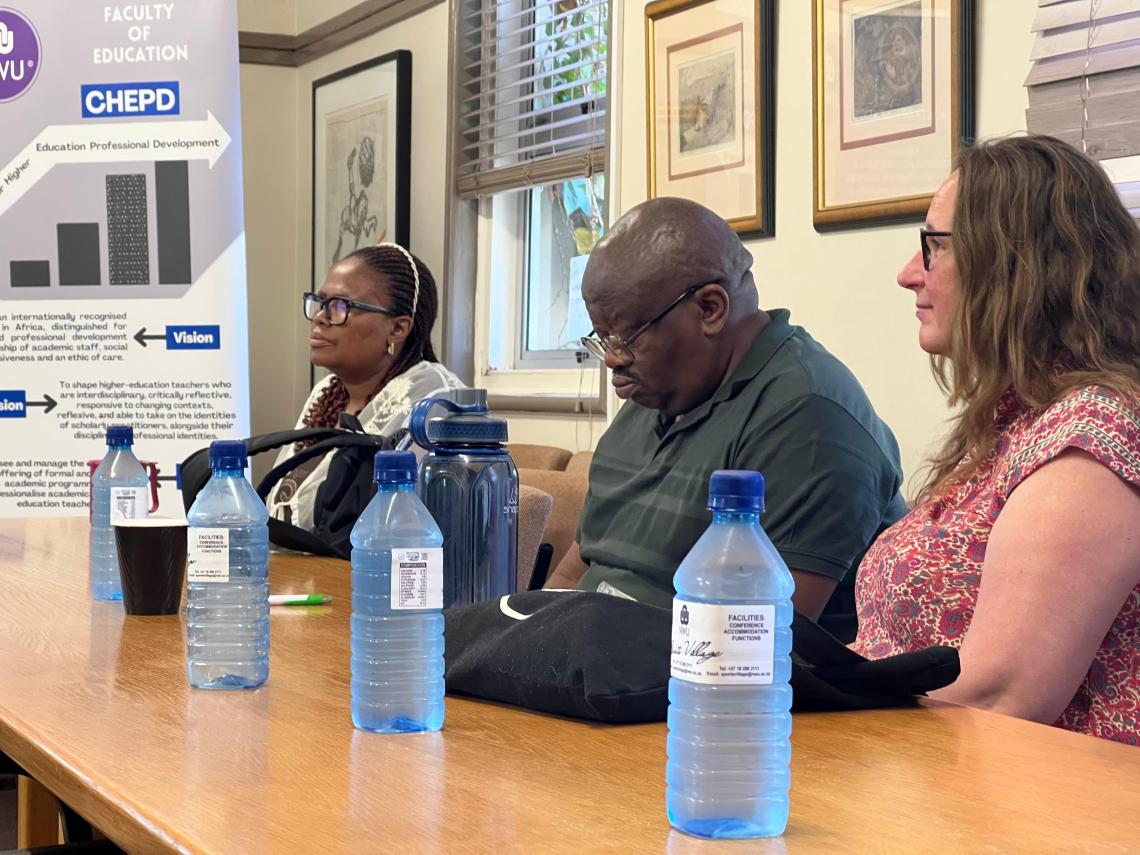
On 3 October 2025, the Centre for Higher Education Professional Development (CHEPD) hosted an interactive discussion on “Crisis Revisited: What To Do with Compliance, Conformism and Complicity in the He – An Interactive Discussion Around Pressure, Despair and Loopholes Out of the Multiple Crises In and Around Higher Education,” bringing together academics to reflect on the challenges and opportunities shaping contemporary higher education.
The interactive discussion, led by Prof Ida Sabelis of Vrije Universiteit Amsterdam and Dr Busisiwe Ntsele from the University of South Africa (UNISA), explored how increasing institutional demands, bureaucratic processes, and neoliberal cultures influence scholarship, teaching, research, and community engagement. The discussion critically examined the growing pressures placed on academics to publish, secure funding, and comply with administrative requirements, raising important questions about academic freedom, creativity, and intellectual independence.
A key focus of the discussion was the impact of ethical clearance procedures and institutional regulations on research. Drawing on personal experiences, the speakers highlighted how lengthy approval processes and rigid systems can delay research and limit opportunities for innovative, community-based scholarship. The discussion also raised concerns about the unintended consequences of compliance-driven processes, particularly for early career researchers seeking to navigate increasingly complex academic environments.
The importance of engaged scholarship emerged as a recurring theme. Participants reflected on the value of recognising indigenous knowledge systems, fostering reciprocal relationships with communities, and ensuring that research contributes meaningfully to addressing societal challenges. Rather than viewing community engagement as a peripheral activity, the discussion emphasised its potential as a central pillar of scholarship, teaching, and learning.
The discussion further explored issues of institutional culture, transformation, decolonisation, and academic publishing. Participants debated the balance between pursuing international recognition and producing scholarship that responds to local realities and community needs. Concerns were also raised about the personal and professional costs associated with challenging established systems and advocating for change within higher education institutions.
Participants highlighted the need for collaboration, solidarity, and ongoing dialogue among academics. The discussion reaffirmed the value of creating spaces where scholars can critically reflect on their experiences, share perspectives, and collectively envision more inclusive, responsive, and socially engaged futures for higher education.
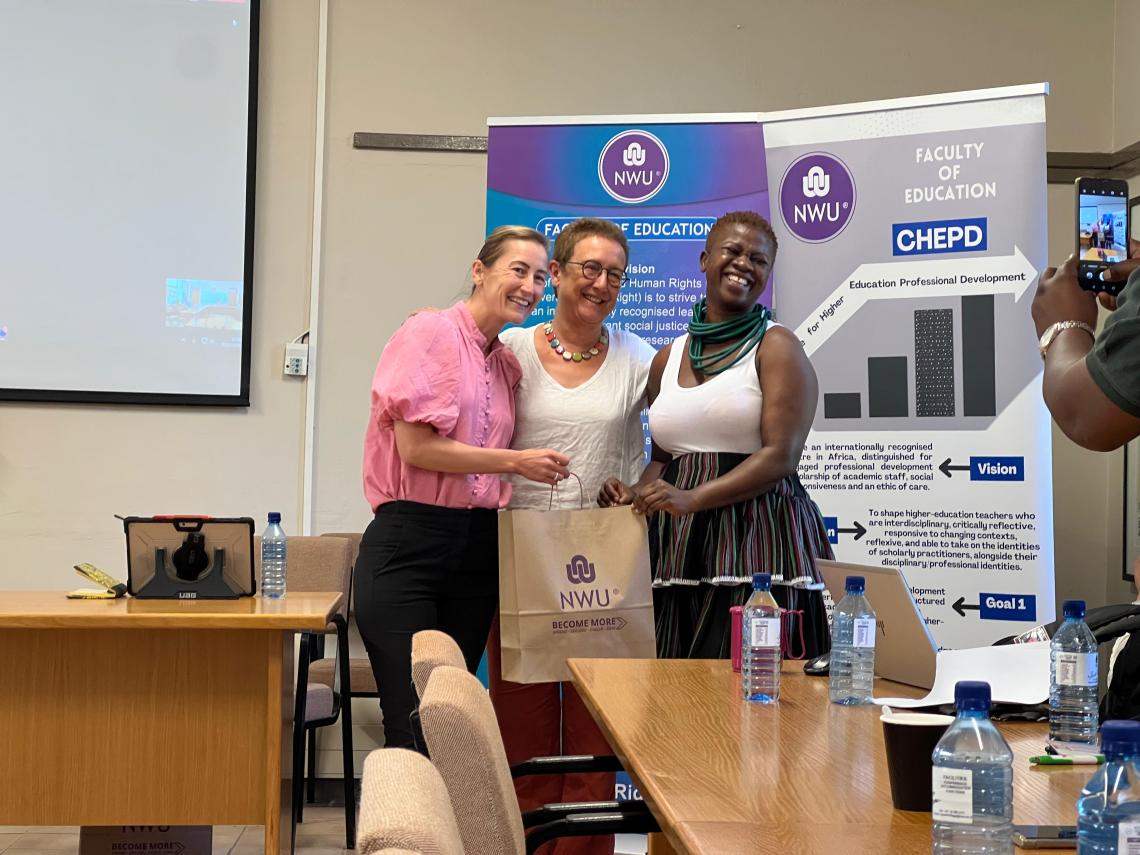
From left to right: Prof Shan Simmonds, Prof Ida Sabelis (VU Amsterdam), and Dr Busisiwe Ntsele (UNISA)